Getting Lost (in a Good Way): A Trip Through Italy
Talking naturally about travel, places, recommendations, and memorable experiences
In this lesson, you will read a natural travel article about Italy and practise the kind of English people really use when describing trips. The focus is not basic travel survival language, but useful conversational phrases for talking about places, comparing experiences, asking for recommendations, and explaining what made a destination feel special.
Vocabulary
Natural travel vocabulary for describing places, experiences, recommendations, and atmosphere.
to walk around without a strict plan, usually to enjoy or discover a place
We spent the afternoon wandering through the back streets of Florence.
stroll, roam, walk around
a particular place; or to notice something interesting
We found a quiet little spot near the river for coffee.
place, location; notice
a very good place that is not well known by tourists
That tiny family restaurant was a real hidden gem.
special find, secret place
not as good or impressive as people say
The famous square was beautiful, but honestly a bit overrated.
overhyped, disappointing
good enough to justify the time, money, or effort
The queue was long, but the view was absolutely worth it.
worth the effort
very full of people
The museum was packed by lunchtime.
crowded, full
calm, peaceful, and not noisy
We found a quiet street away from the crowds.
peaceful, calm
a place used mostly by people who live in the area, not tourists
A local place usually feels more relaxed than a tourist restaurant.
neighbourhood place
designed mainly for tourists, often less authentic
The food was fine, but the restaurant felt too touristy.
commercial, visitor-focused
to suggest something because you think it is good
The waiter recommended a small seafood restaurant near the harbour.
suggest
to arrive somewhere or do something without planning it
We ended up staying in that café for two hours.
eventually do, finish by
to move from place to place in a town, city, or country
It is easy to get around Italy by train.
travel around, move around
to meet someone by chance
I ran into another traveller at the station.
bump into, meet by chance
to visit, look at, or try something interesting
You should check out the market in the morning.
visit, try, explore
to spend time looking at or experiencing something fully
We sat on the steps and took in the view.
absorb, enjoy
what you can see from a place
The view from the hill was incredible at sunset.
scene, outlook
the feeling or mood of a place
The restaurant had a warm, relaxed atmosphere.
mood, feeling
the general feeling a place, person, or situation gives you
The city had a friendly, creative vibe.
feeling, energy
full of activity or people
The main street was busy but still enjoyable.
lively, active
relaxed, calm, and informal
The beach town had a really chill vibe.
relaxed, easy-going
Reading
Read the article and explore the highlighted vocabulary. Use the controls to listen as you read.
I didn’t go to Italy with a strict plan — and honestly, that was probably the best decision I made.
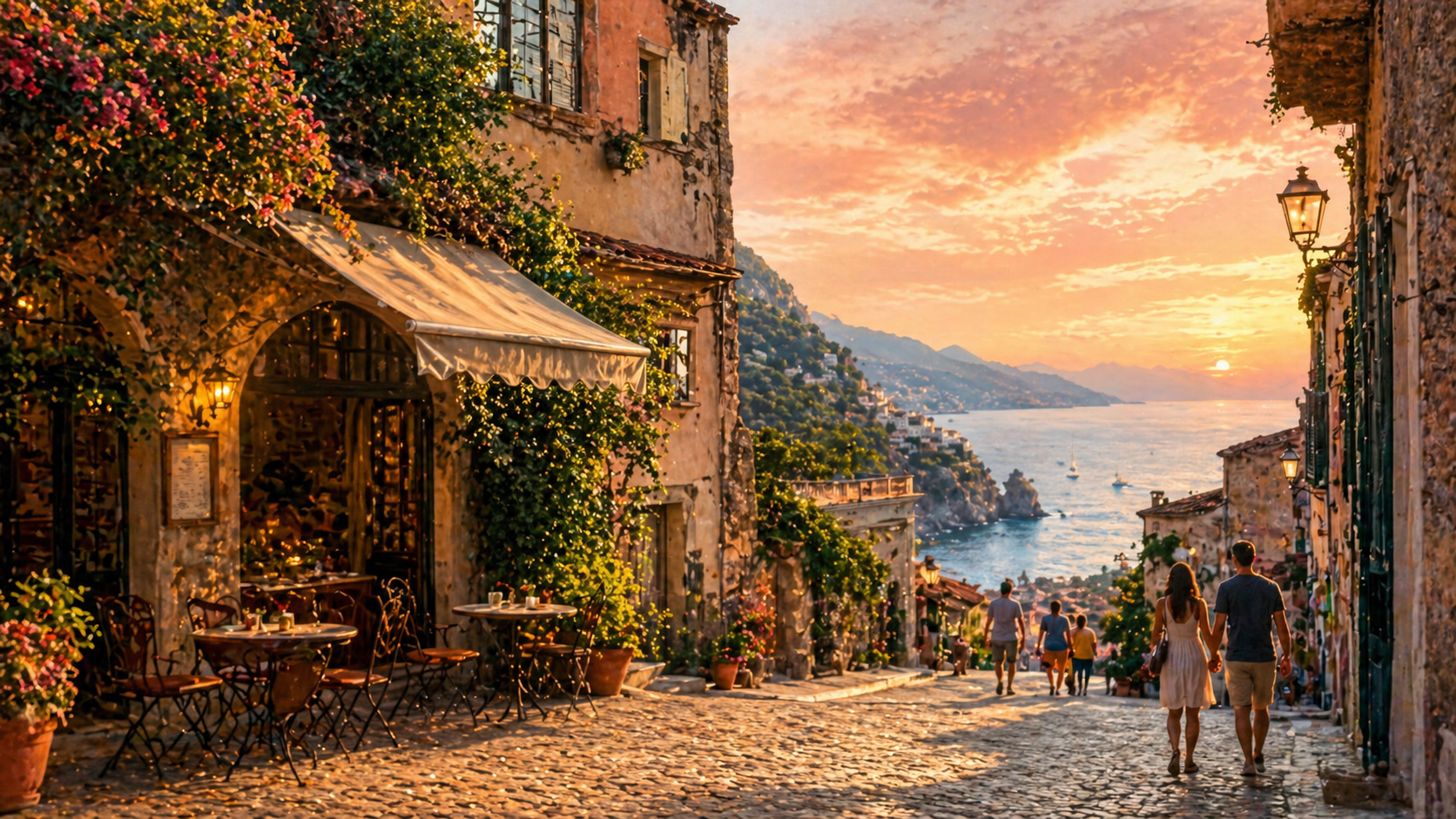
Most days, I would just wanderwalk around without a strict plan around and see what I could find. Some of the best spotsinteresting places weren’t even in the guidebooks. One afternoon in Florence, I ended uparrived somewhere or did something without planning it in a small street with almost no tourists, and I found this tiny café that felt like a real hidden gema great place that is not well known. The coffee was better than anything I had in the more popular places, and the atmospherethe feeling or mood of a place was completely different — quieter, more relaxed, more real.
Of course, I still visited the famous landmarks. Some of them were definitely worth itgood enough for the time, money, or effort, but others felt a bit overratednot as good as people say, especially when they were packedvery full of people. It’s hard to enjoy a place when you’re surrounded by crowds trying to take the same photo.
Getting aroundmoving from place to place was easier than I expected. I mostly walked, but I also used trains to move between cities. I even ran intomet someone by chance another traveller on a train who gave me a great recommendationa suggestion because something is good for a local placea place used mostly by people who live there in Rome — not touristymainly designed for tourists at all, just simple food done really well.
What I realised during the trip is that travelling isn’t just about seeing places — it’s about how those places feel. The viewwhat you can see from a place can be amazing, but the vibethe general feeling or energy of a place matters just as much. Some places look beautiful but feel stressful, while others are less impressive but much more enjoyable.
In the end, my favourite moments weren’t the big attractions. They were the small, unexpected experiences — sitting in a quietcalm and peaceful square, finding a good place to eat, or just taking inenjoying and experiencing fully the atmosphere of a city without rushing. Even the busyfull of activity streets felt enjoyable when I stopped trying to tick things off a list and let the trip feel more chillrelaxed and informal.
Discussion
Use these questions to practise natural speaking, describing, comparing, and giving recommendations.
Vocabulary Check
Choose the best answer for each question.
1. A small place that is excellent but not well known is a ___ .
2. If something is “overrated”, it is ___ .
3. “We ended up in a tiny café” means we got there ___ .
4. A place that is “packed” is ___ .
5. If a restaurant feels “touristy”, it probably ___ .
6. To “get around” a city means to ___ .
7. If you “run into” someone, you ___ .
8. To “check out” a market means to ___ .
9. The “atmosphere” of a place means its ___ .
10. A “local place” is usually used by ___ .
11. If something is “worth it”, it is ___ .
12. To “take in” a view means to ___ .
13. A “chill” place feels ___ .
14. A good “recommendation” is a useful ___ .
15. A city with a good “vibe” has a good ___ .
Speaking Accuracy
Practise upgrading simple travel sentences into more natural B2 spoken English.
Prepositions & Natural Travel Phrases
Choose the correct preposition to complete each natural travel sentence.
1. We wandered ___ the old streets for hours.
2. I ran ___ another traveller at the station.
3. The café was hidden ___ a quiet side street.
4. We got around Rome mostly ___ foot.
5. The restaurant was packed ___ tourists.
6. The view ___ the hill was incredible.
7. We ended up ___ a local place near the river.
8. I would recommend this city ___ anyone who loves food and walking.
Homework
Review the lesson vocabulary and practise describing travel experiences naturally.
Part 1: Finish the Sentence
Complete each sentence with your own ideas.
Part 2: Choose the Vocabulary Word
Use the words from the lesson to answer each question.
1. A place that is excellent but not famous.
2. A place that is full of people.
3. To meet someone by chance.
4. A place mainly designed for visitors.
5. The feeling or energy of a place.
6. To move around a city or country.
7. A suggestion because something is good.
8. Relaxed and informal.
Part 3: Upgrade the Sentence
Rewrite the basic sentence to sound more natural and descriptive.